Plumbing · Marion, IL
Every visit produces a written description of what was found, what was replaced, and what remains in its original condition. The same document lists the materials used so future technicians can identify compatible parts without guesswork.
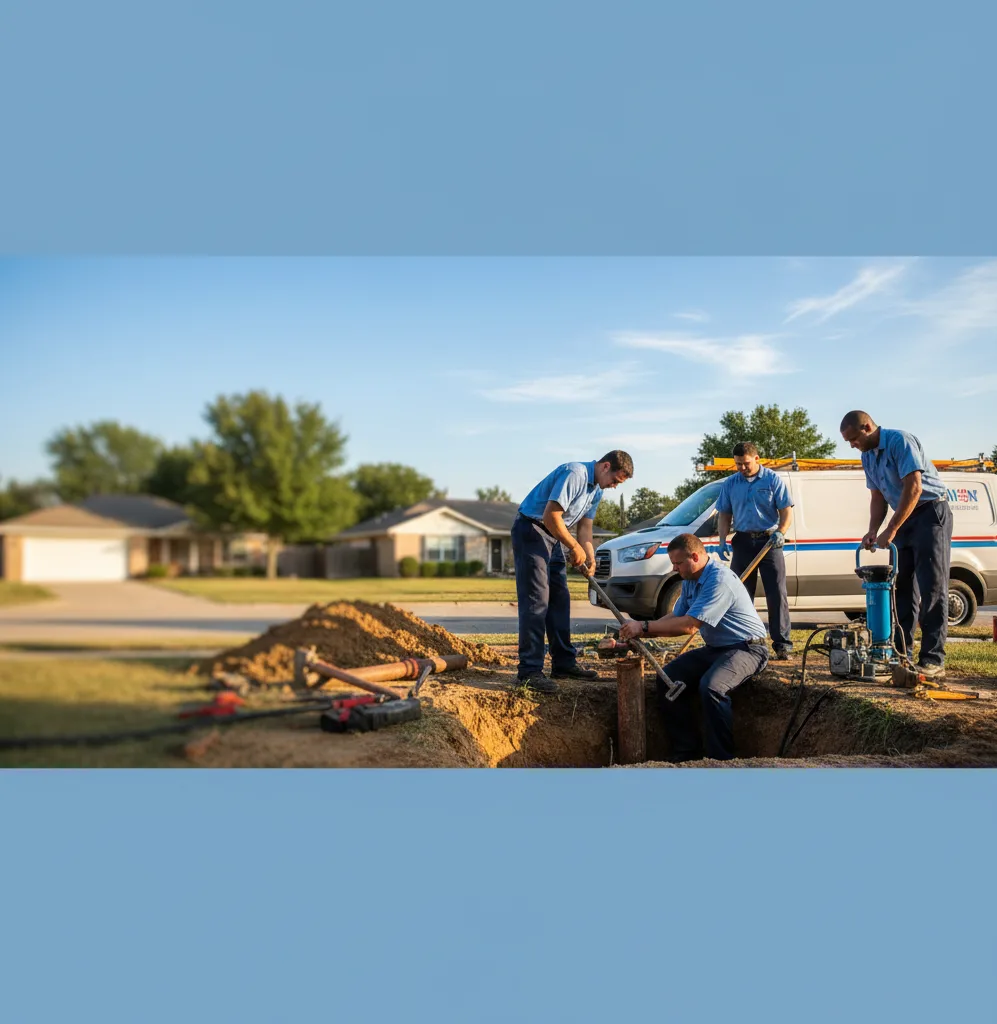
A sudden drop in water pressure often shows up first at the farthest fixture from the main line. Homeowners notice it when the shower loses force while the kitchen tap still runs normally. Another common indicator is a faint musty smell near baseboards or under sinks that appears only after heavy rain or when the irrigation system runs. These clues usually mean a hidden leak has occurred behind a wall or under a slab and is now affecting nearby materials.
Technicians begin by shutting off the main valve and listening with a simple acoustic device at exposed fittings. They then isolate sections one by one, checking for continued flow at the meter. Once the affected run is identified, access is made through the smallest opening that still allows proper repair. The goal is to replace only the damaged length rather than opening large sections of wall or floor unless the pipe material itself has reached the end of its service life.
Many homes built before the mid-1980s still contain galvanized steel that has narrowed from internal corrosion. When a leak develops in these lines the repair usually involves cutting back to sound metal and installing a transition fitting to copper or PEX. Newer construction more often uses copper or early PEX, both of which fail differently. Copper tends to develop pinholes at joints where flux was over-applied, while PEX can split after repeated freeze-thaw cycles in unconditioned crawl spaces. Knowing the material helps the technician choose the right joining method and avoid mixing incompatible metals that would accelerate future corrosion.
Emergency plumbing work addresses sudden failures in pipes, drains, and fixtures that can develop from ongoing environmental pressures. The ground beneath any structure affects how foundations settle and how underground lines hold up over decades. Marion is built on clay loam.
The water that flows through local systems can influence corrosion rates and mineral buildup inside lines and appliances. Weather also determines when freeze-related or heat-related stress appears in plumbing networks.
Marion sees hot summers and cold winters, around 11 inches of snow a year, and 100 nights below freezing.
FAQ

The interval depends on local water hardness and how much hot water the household uses. In areas with moderate hardness, once a year is usually sufficient. Homes with very hard water may benefit from flushing every six months. A technician can check the amount of sediment during the first service call and recommend a schedule based on what is found.
Noise usually comes from sediment that has settled at the bottom of the tank and is being heated repeatedly. The sound can range from popping to rumbling depending on how much material has accumulated. Flushing the tank removes most of the sediment and quiets the unit. In some cases the dip tube has broken and is directing cold water directly onto the heating element, which also creates noise.
The task requires shutting off power or gas, draining the tank, and working with electrical connections or gas fittings. Incorrect reassembly can create leaks or safety hazards. Most homeowners lack the specific tools needed to torque the new element correctly. A licensed technician performs the replacement and tests the unit afterward.
Water Heater Repair & Plumber across Marion, IL. Call (888) 205-2213.
Call (888) 205-2213